Response Curves Explained: Finding Your Ad Spend Sweet Spot
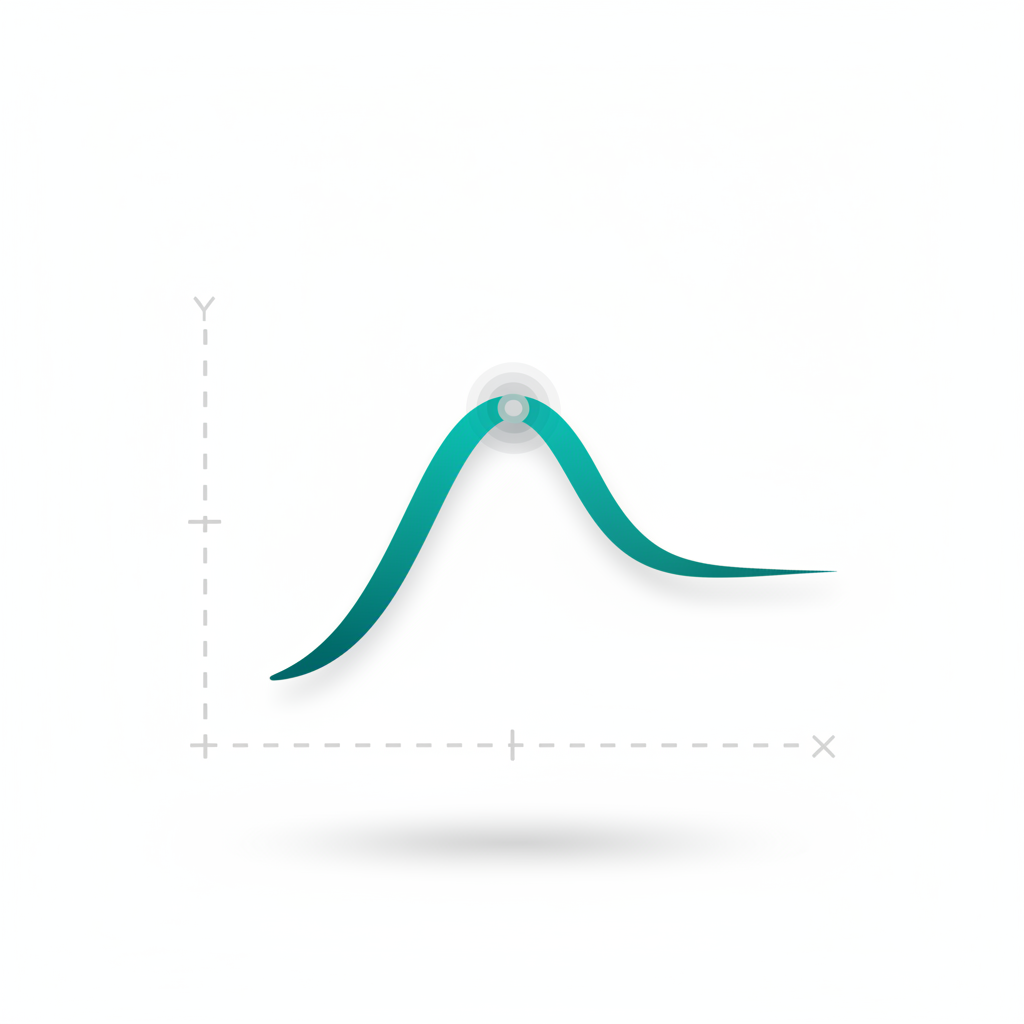
If you only look at one chart in your MMM report, make it the response curves. They answer the most important question in media planning: "Where should I spend the next dollar?"
What a Response Curve Shows
A response curve (also called a saturation curve) maps the relationship between how much you spend on a channel and how much incremental revenue it generates. The x-axis is spend. The y-axis is revenue.
The curve always starts steep. Your first $10K on Meta generates a lot of return because you are reaching fresh audiences with high purchase intent. Then it gradually bends. At $50K, each additional dollar generates less. At $150K, the curve is nearly flat. You are showing the same ad to the same people for the sixth time.
This is called diminishing returns, and every marketing channel has this pattern. The only question is where the curve starts to bend.
The Saturation Point
The saturation point is where the curve flattens significantly. Spending beyond it generates minimal incremental return. You are essentially buying frequency (showing ads to the same people again) rather than reach (finding new people).
There is no single universal saturation point. It depends on your audience size, your targeting, the channel's total inventory, and market competition. A niche B2B product might saturate Google Ads at $40K/month. A mass-market DTC brand might not saturate Meta until $500K/month.
How to Read Them: Practical Examples
Google Ads saturating early: A B2B SaaS company spends $80K/month on Google Search. The response curve shows the inflection point at $55K. Beyond that, they are bidding on broader keywords with lower intent. The last $25K generates $18K in revenue (0.7x ROAS) while the first $55K generates $187K (3.4x ROAS). The answer: cap Google at $55K and move the $25K somewhere else.
TikTok still linear: The same company recently started spending $15K/month on TikTok. The response curve is still nearly linear, meaning returns have barely started to diminish. This is a clear signal to increase TikTok spend. The $25K freed from Google could go here.
Meta in the middle:At $120K/month, Meta's curve is starting to bend but has not flattened. Marginal ROAS is still above 1.5x. There is room to spend more, but keep an eye on it.
What to Do When You Hit Saturation
You have three options:
1. Reallocate to unsaturated channels. This is the obvious move. Take spend from channels past their inflection point and move it to channels that are still linear. The total budget stays the same. Revenue goes up.
2. Improve creative to shift the curve. Response curves are not fixed. Better creative, better landing pages, or better audience targeting can steepen the curve. If you launch a new creative concept that resonates, the saturation point moves higher. This is why creative testing matters even after you have an MMM.
3. Accept the lower marginal return. Sometimes there is a strategic reason to spend past saturation. Brand-building. Market share defense. Competitive blocking. Just do it knowingly, with the numbers in front of you.
You can explore response curves from a real model in our demo report. Each channel shows its curve with the current spend level marked.
Ready to see what your budget is actually doing?
Start your free trial. Upload your data, get your first MMM report in days, not months.
Start your free trial