
MMM Basics
Mar 15, 20268 min read
What is Marketing Mix Modeling? A Marketer's Guide for 2026
Learn what marketing mix modeling is, how Bayesian MMM works, what data you need, and how long it takes to get results. A practical guide for marketers.
Insights on marketing mix modeling, budget optimization, and data-driven growth.
Learn what marketing mix modeling is, how Bayesian MMM works, what data you need, and how long it takes to get results. A practical guide for marketers.
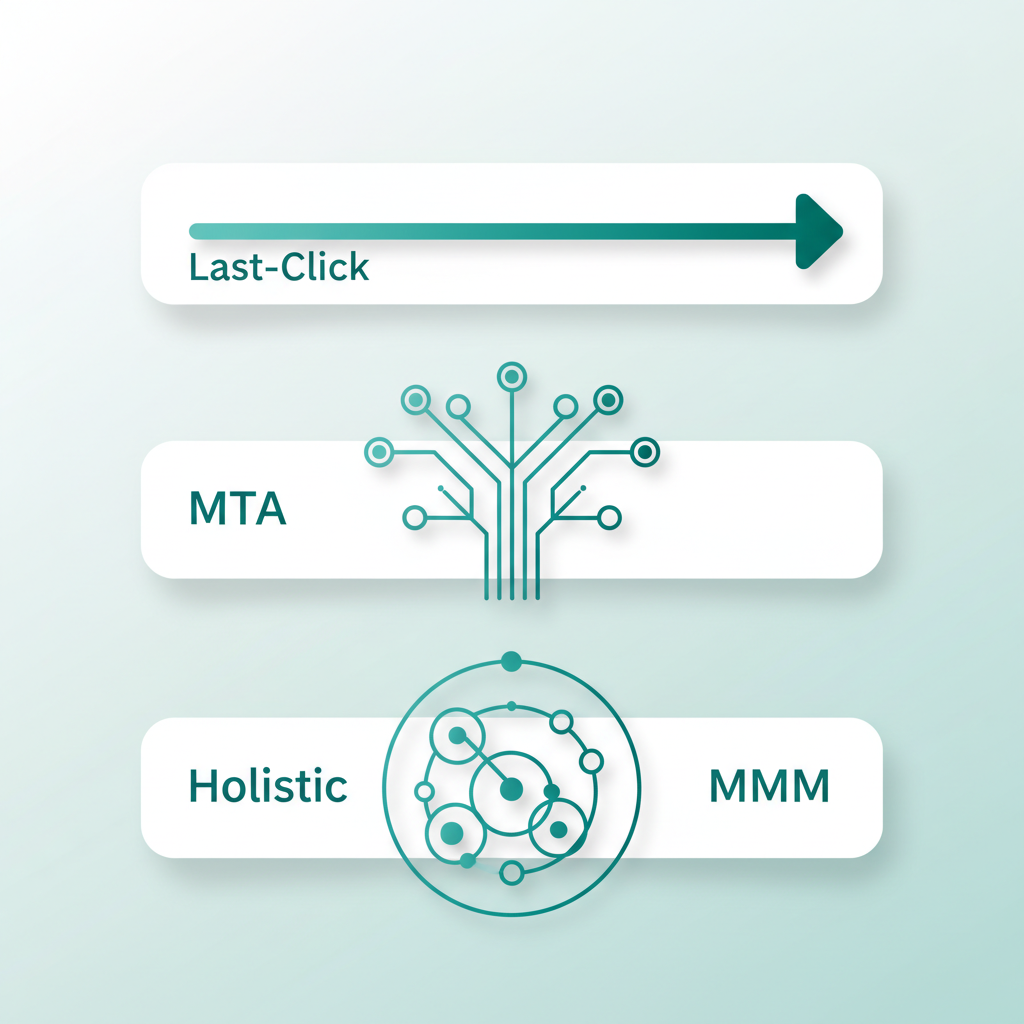
Compare Marketing Mix Modeling, Multi-Touch Attribution, and Last-Click Attribution. Pros, cons, and when to use each model post-iOS 14.

What is Google Meridian, how it compares to Meta Robyn and LightweightMMM, who it's built for, and what technical requirements you need to run it.

Five warning signs your marketing budget allocation is off, with specific fixes for each. Stop wasting ad spend with data-driven allocation.

Compare agency MMM ($60K-$150K, 3-6 months) vs self-serve platforms ($1K-$3K/mo). Honest breakdown of costs, timelines, and tradeoffs.

Plain-English guide to reading an MMM report: ROAS, channel contribution, response curves, confidence intervals, and adstock explained with examples.

What Bayesian MMM means in practice: credible intervals, uncertainty quantification, and how it changes the way you allocate budget across channels.

How iOS 14.5 broke multi-touch attribution, why MTA collapsed, and the practical migration path to MMM plus server-side tracking.

Why the 70/20/10 rule is outdated and a practical three-layer framework for data-driven budget allocation using diminishing returns and seasonal adjustment.

Minimum data requirements, budget thresholds, and a simplified approach to MMM for businesses spending $20K-$200K/month on ads.

What response curves show, how to find your saturation point, and what to do when a channel is saturated. Practical examples included.

What incrementality tests are, how they complement MMM, when to use which, practical geo-lift setup, and cost comparison.

Meta CPM trends 2023-2026, creative fatigue, audience saturation, and what MMM reveals about Meta's real contribution vs platform reporting.

Why PMax is a black box, what Google won't show you, how MMM measures PMax contribution independently, and the brand search cannibalization problem.

What actually changes when cookies disappear, server-side tracking, consent mode, MMM as the anchor measurement, and first-party data strategy.

TikTok's view-through problem, platform over-reporting, why MMM is the right tool for TikTok, and real examples of TikTok MMM results.

Industry benchmarks by sector, channel split recommendations, when to increase or decrease spend, and how MMM informs budget planning.

What adstock is with simple examples, decay rates by channel, why it matters for budget timing, and how MMM models carryover effects.

Why brand marketing is hard to measure, how MMM captures brand effect through baseline shift, and a practical example with YouTube and podcast spend.

DTC-specific MMM challenges, which KPI to model, minimum data requirements, and a real example of channel mix reallocation for an e-commerce brand.

What diminishing returns look like in practice, channel-specific saturation points, how to identify the tipping point, and what to do when you hit it.

Which GA4 metrics to export, session vs user vs event scoping, BigQuery export, and common pitfalls that break your MMM results.

MMM-measured ROAS benchmarks by channel, by industry, and by company size. Plus why benchmarks can mislead without context.

Why MTA collapsed after iOS 14, what replaced it, the modern measurement stack, and how to transition from MTA to MMM.
Join 500+ marketers getting weekly MMM insights, budget optimization tips, and product updates.